SpaceX finalized the acquisition of Anysphere, the startup behind the popular AI coding assistant Cursor. This transaction establishes a massive $60 billion Cursor valuation. Following the August 14 finalization, the SpaceX stock experienced a noticeable contraction, trading lower around $141.93 during the morning session in New York. This represents a 2.9% decline from the previous close. The market now questions if this integration strengthens the broader artificial intelligence strategy. Alternatively, it might primarily introduce a new layer of equity dilution.
Key points about SpaceX and Cursor:
- SpaceX finalized the acquisition of Anysphere, the startup behind the popular AI coding assistant Cursor.
- This transaction establishes a massive $60 billion Cursor valuation.
- Following the August 14 finalization, the SpaceX stock experienced a noticeable contraction, trading lower around $141.93 during the morning session in New York.
The $60 Billion Cursor Acquisition Structure
This transaction’s financial mechanics reveal a deliberate strategy. The firm aims to preserve operational cash flow and secure top-tier software assets simultaneously.
Equity issuance over cash reserves
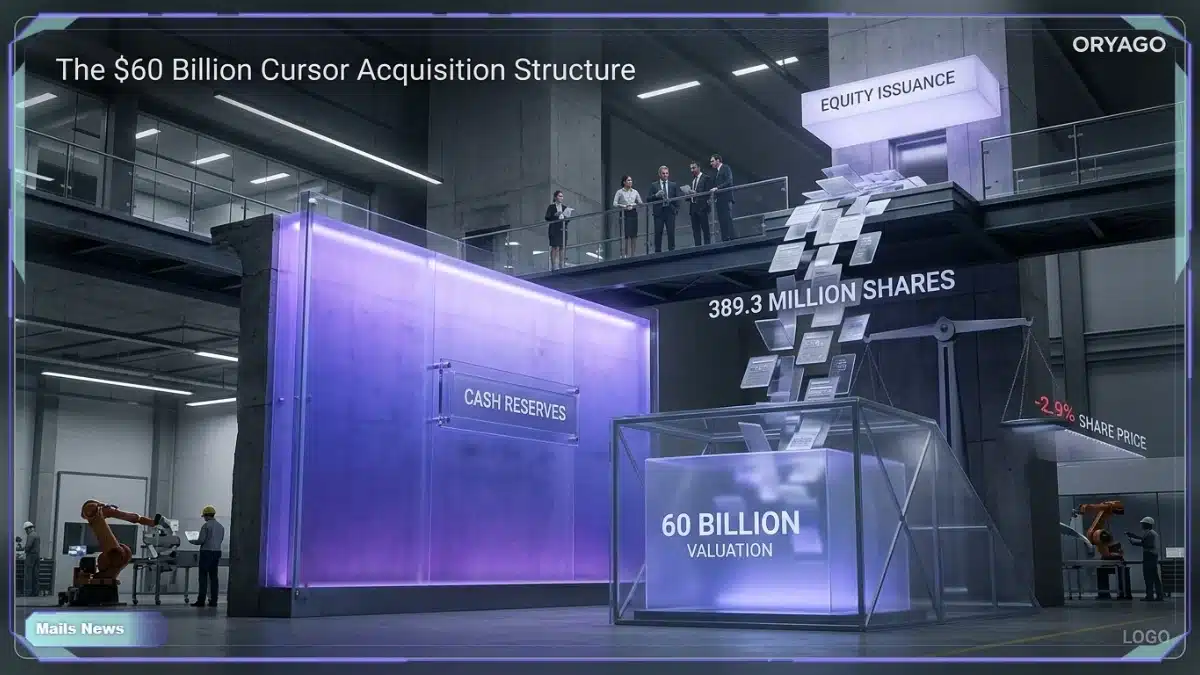
The $60 billion headline figure represents the implied Cursor valuation within the deal’s framework. It does not indicate a direct cash expenditure. To execute the Cursor acquisition, SpaceX relied heavily on its own equity rather than depleting its cash reserves. The company issued approximately 389.3 million Class A shares to compensate the existing common and preferred stakeholders of Anysphere. This payment structure helps the firm avoid draining its liquid capital, which remains essential for capital-intensive rocket launches and satellite deployments. Furthermore, existing restricted stock units held by the acquired team were converted directly into SpaceX shares. Unvested stock awards and options underwent a similar transformation, becoming equivalent instruments tied to the parent company.
Evaluating the dilution effect
This equity-centric approach successfully limits immediate cash burn. However, it fundamentally alters the capital structure by increasing the total outstanding shares. Private market investors now focus on a specific balance. They weigh the strategic value of new software capabilities against the mathematical reality of equity dilution. The 2.9% drop in the share price reflects a direct market adjustment to this expanded equity pool. Shareholders currently price in the cost of newly issued SpaceX shares. They demand clear evidence that long-term technological benefits will eventually outpace the short-term reduction in individual share value.
Integrating Cursor into the AI Segment
The addition of this developer-focused tool fundamentally reorganizes the internal corporate structure, establishing a dedicated software ecosystem.
A new pillar alongside Space and Connectivity
While SpaceX built its historical reputation on groundbreaking hardware achievements, it has now officially restructured its operations into three distinct divisions: Space, Connectivity, and AI. The artificial intelligence segment, driven by the vision of Elon Musk, now consolidates several high-profile initiatives. These include the proprietary language model Grok, the broader X platform integrations, and various computational infrastructure projects. Acquiring the Anysphere team accelerates this transition. This move builds upon the momentum from the earlier xAI integration. This reorganization signals a definitive shift from a pure aerospace manufacturer to a diversified technology conglomerate.
Empowering developers with AI coding
Cursor operates as an advanced AI coding platform. It assists developers in writing, debugging, and managing complex software architectures. The acquired entity confirmed a key detail following the merger. Its engineering teams will gain direct access to the new parent company’s massive computational backend. This synergy allows developers to train and execute significantly more powerful models than previously possible. The firm embeds these artificial intelligence tools directly into its internal workflow. This strategy aims to accelerate software development cycles. Simultaneously, the company refines a premium product scalable for external enterprise clients.
Monetizing the 1.4 GW Compute Infrastructure
Beyond internal software development, the company is aggressively expanding its physical data center footprint to capture external enterprise demand.
Installed capacity and AI data centers
At the close of the second quarter, the firm reported a massive installed capacity of 1.4 gigawatts of nameplate compute draw. This figure represents a substantial leap from the 0.4 GW recorded during the same period a year earlier. Management defines this specific metric through a simple calculation. They multiply the total installed processors in their AI data centers by their theoretical maximum power consumption. This number highlights the sheer scale of the physical infrastructure. However, it represents installed capacity instead of the actual real-time power draw or effective hardware utilization rate.
External cloud contracts and revenue generation
SpaceX does not restrict this massive computational power solely to its internal projects. It actively monetizes the infrastructure by selling access to external clients. Regulatory filings and corporate disclosures reveal lucrative cloud service agreements. These include a major May contract with Anthropic covering approximately 325,000 Nvidia GPU units. A subsequent agreement with Google cloud encompasses roughly 110,000 processors and the associated supporting infrastructure. These external contracts validate the heavy capital expenditures, helping the AI segment generate $2.56 billion in revenue during the second quarter. However, the ultimate profitability of these operations remains highly dependent on energy costs, cooling efficiency, and sustained market demand.
Financial Performance and Analyst Projections
The rapid expansion into high-performance computing requires significant capital, creating a complex financial profile that analysts are closely monitoring.
Q2 2026 revenue and net loss
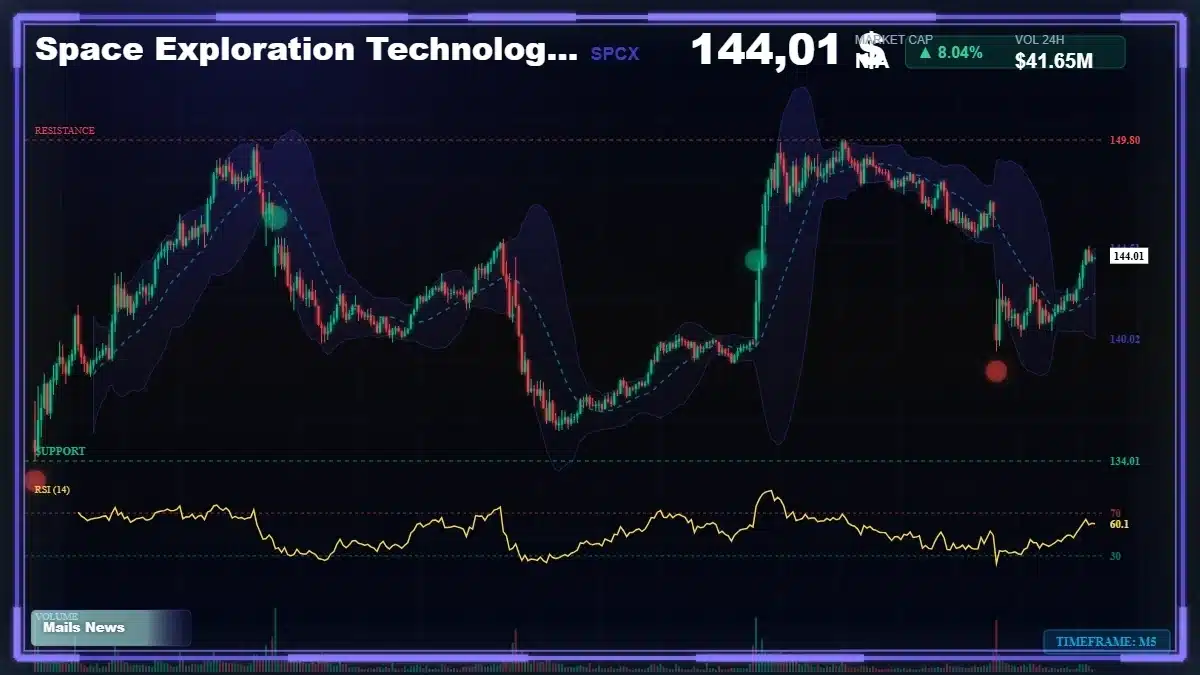
The underlying financial data provides a clear picture of the operational leverage required to sustain this growth. During the second quarter of 2026, the company reported $7.8 billion in total revenue, marking an impressive 92% year-over-year increase. Despite this massive top-line expansion, the firm recorded a net loss of $541 million for the same period. The firm integrates a highly valued software asset into a balance sheet still optimizing for consistent profitability. This action creates a challenging dynamic. The market carefully weighs the rapid revenue growth. Investors compare it against the massive capital expenditures required to maintain the physical infrastructure.
Deutsche Bank forecasts and SpaceX IPO prospects
Despite the short-term profitability challenges, institutional outlooks remain largely positive. Following the finalization of the software deal, Deutsche Bank maintained a buy recommendation on the stock. Analyst Edison Yu reportedly raised his 2027 revenue forecast for the company to $115 billion. This marks an increase from his previous $97 billion estimate, and he set a $235 price target. These figures represent speculative analyst projections rather than official corporate guidance. Such aggressive growth models continue to fuel discussions regarding a potential SpaceX IPO. Public market investors eagerly await the opportunity to participate in the expanding artificial intelligence and aerospace ecosystem.
The Distant Horizon of Orbital AI
Terrestrial data centers represent only the first phase. The company’s much broader computational strategy extends into low Earth orbit.
Deploying compute in space
The SpaceX corporate roadmap outlines an ambitious plan to build a network of orbital AI computing satellites. The firm published documents prior to recent funding rounds indicating plans to begin deploying space-based processing nodes as early as 2028. This initiative aims to provide low-latency, high-performance computing capabilities directly from orbit, bypassing traditional terrestrial network constraints.
Manufacturing at the Bastrop facility
To support this unprecedented engineering challenge, the company is developing a large-scale manufacturing facility in Bastrop, Texas. The company designed this plant specifically to handle the mass production of these specialized satellites. Operations will potentially scale up by late 2027. While these timelines highlight the visionary scope of the leadership team, they remain internal corporate targets. They do not guarantee operational deployment within the announced schedule. Consequently, the market currently discounts these distant milestones in favor of immediate terrestrial execution.
Assessing the Next Strategic Threshold
Integrating the Anysphere team marks a definitive pivot. However, the market requires concrete execution to validate the premium valuation.
The acquisition of Cursor undeniably accelerates the transition of the company into a diversified technology powerhouse. However, the transaction must be evaluated through the lens of its financial structure. The firm funded the deal primarily by issuing new shares instead of a direct cash outlay, impacting the immediate 2.9% decline in the stock price reflects a rational market adjustment to equity dilution. The available data does not suggest a fundamental rejection of the underlying software strategy. Instead, it indicates a recalibration of individual share value.
Moving forward, the critical metric to monitor is the utilization rate and profit margin of the 1.4 GW compute infrastructure. The newly formed software division might leverage this hardware to secure additional high-value enterprise contracts. If successful, accelerated revenue growth will absorb the initial dilution. The broader financial environment also plays a role. Institutional investors navigate shifting macroeconomic signals, ranging from SEC regulatory updates to Bitcoin price volatility and emerging DeFi protocols. Consequently, private equity valuations face increased scrutiny. The AI segment’s third-quarter revenue performance will provide the next definitive signal. This metric will confirm whether the expanded equity pool generates the required proportional growth.
FAQ: SpaceX, Cursor acquisition structure, stock dilution and Orbital AI deployment
SpaceX finalized the acquisition of Anysphere, the developer of the AI coding platform Cursor, establishing an implied $60 billion valuation. The transaction was executed on August 14 primarily through the issuance of 389.3 million Class A shares rather than a direct cash payment.
Following the finalization of the deal, the SpaceX stock experienced a 2.9% decline, trading lower around $141.93 during the morning session in New York. This downward movement reflects the market pricing in the dilution effect caused by the issuance of nearly 400 million new shares to fund the transaction.
The company aims to deploy orbital AI computing satellites beginning in 2028, supported by a new large-scale manufacturing facility in Bastrop, Texas, slated for late 2027. In the near term, the market will monitor the utilization rate and revenue generation of its 1.4 GW terrestrial compute infrastructure to justify the recent equity expansion.
Disclaimer: This article is for informational purposes only and does not constitute investment advice. Cryptocurrencies and private equities are volatile assets. Always conduct your own research before making any decision.