The crypto market faced a sharp correction on September 24. Bitcoin stabilized near $84,100. Major altcoins posted daily losses exceeding 5%. This downturn followed a significant reduction in speculative leverage, even as institutional ETF inflows remained positive. The market’s total capitalization dropped to $2.86 trillion, and 24-hour trading volume reached $117.6 billion.
Despite the pullback, the purge in open interest and ongoing ETF support remain notable. These factors indicate that profit-taking, not a structural breakdown, is driving the move. However, with U.S. Treasury yields remain above 5%, and the dollar stays strong. The ability of key support levels to hold will shape the next phase for Bitcoin and altcoins.
Key points about crypto market and Bitcoin:
- Speculative leverage has been sharply reduced, with Bitcoin perpetual open interest dropping by over 18% in a single session.
- ETF inflows remain positive, totaling $336 million on September 23. However, these inflows are not enough to offset macroeconomic pressures from high U.S. yields and a strong dollar.
- The main risk is a break below $82,000–$83,000 for Bitcoin; holding this support with contained leverage is crucial for market stability.
Leverage Purge and ETF Flows: Signals from the Crypto Market
The crypto market correction is defined by a decisive reduction in speculative positions and continued, though slowing, institutional inflows. These shifts are reshaping risk dynamics for Bitcoin and altcoins.
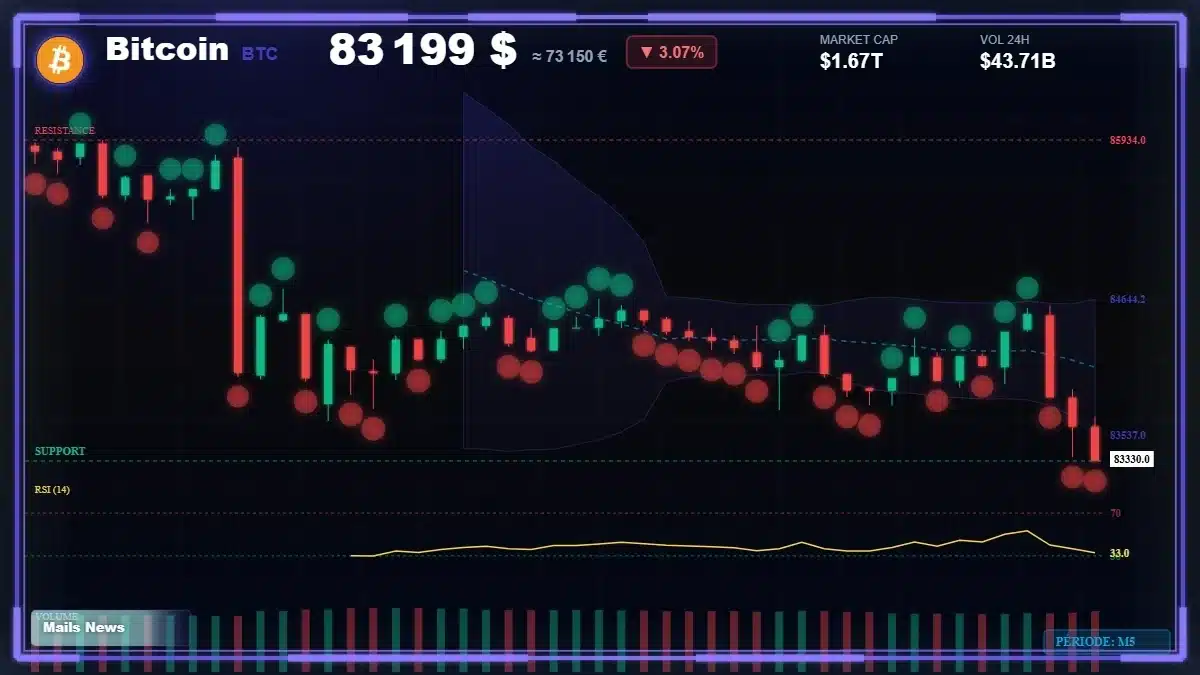
Open Interest Drop Points to Healthier Market Structure
Bitcoin perpetual futures open interest fell from $481 billion to $393.9 billion in one session, a drop of more than 18%. This purge of over $87 billion in speculative leverage means fragile long positions have been cleared out. This reduces the risk of cascading liquidations. Such a move typically leaves the market less vulnerable to further sharp declines. This holds if new leverage does not rebuild too quickly.
ETF Inflows Offer Institutional Support
Aggregated ETF crypto inflows reached $336 million on September 23, following $824 million the previous day, according to CoinMarketCap. While institutional demand has slowed, it has not disappeared. These inflows help cushion the market, even if they cannot fully counteract external macroeconomic pressures. The figures reflect global ETF flows, not just U.S. spot Bitcoin or Ethereum ETFs.
Altcoins Underperform as Market Breadth Narrows
Major altcoins have suffered steeper losses than Bitcoin. XRP dropped 7.62% to $1.49 in 24 hours, though it remains up 15.03% over the week. Solana lost 3.35% but is still up 14.79% weekly. High-beta tokens like UNI (-11.6%), AVAX (-8.4%), XLM (-8.1%), DOGE (-7.6%), and ADA (-6.8%) have seen the sharpest corrections. The Altcoin Season Index has cooled to 47/100, reflecting a less favorable environment for altcoins today.
Macroeconomic Pressures: Treasury Yields, Dollar Strength, and Market Risks
External macroeconomic factors are exerting significant pressure on the crypto market. U.S. Treasury yields, a strong dollar, and robust economic data are shifting the risk-reward balance for speculative assets.
U.S. Treasury Yields Above 5% Challenge Crypto Valuations
The yield on the U.S. 10-year Treasury is around 5.12%, after peaking at 5.14%. Elevated yields increase the appeal of risk-free assets and reduce the relative attractiveness of cryptocurrencies. The move was fueled by a strong U.S. PMI composite reading of 58.4 in September, signaling robust economic activity and raising expectations that the Federal Reserve may keep rates higher for longer.
Dollar and Oil Prices Add to Downward Pressure
The dollar index (DXY) stands at 101.1, while Brent crude remains above $102. A firm dollar and high oil prices typically weigh on speculative assets, including crypto. Historically, altcoins perform better when the dollar and yields are falling. The current environment is the opposite : high yields, a strong dollar, and Bitcoin dominance at 59%.
Sentiment and Technical Levels in Focus
The Fear & Greed Index is elevated at 73, indicating persistent optimism despite the correction. Key technical levels are now in focus: Bitcoin’s main support is $82,000–$83,000, Ethereum must hold $2,600–$2,650, Solana needs to defend $110–$112, and XRP must stay above $1.48–$1.50 to avoid further downside.
Scenarios and Catalysts: What Could Shift the Crypto Market Next
The next phase for the crypto market will depend on whether key supports hold and how upcoming macro events unfold. Several scenarios are possible, each with distinct triggers and risks.
Potential Bullish, Neutral, and Bearish Scenarios
If Bitcoin holds $82,000–$83,000 and U.S. yields ease after upcoming data or Treasury auctions, a rebound toward $85,000–$86,000 is possible without a surge in leverage. A neutral scenario would see Bitcoin range-bound between $82,000 and $86,000, with altcoins consolidating and open interest stable near $400 billion. The bearish case involves Bitcoin losing $82,000 support while yields stay above 5.10–5.15% and leverage rebuilds, which would increase risk for altcoins.
Key Events and Data Releases to Watch
Upcoming events include the Swiss National Bank’s decision, speeches by Federal Reserve officials, U.S. jobless claims, the 7-year Treasury auction, and the Fed’s SCOOS report. Diplomatic developments, such as the Trump-Xi summit and U.S.-Iran talks, could also influence risk appetite. The 7-year Treasury auction is particularly important after recent bond market volatility.
Internal Health Versus External Risks
The crypto market is internally healthier after the leverage purge and ongoing ETF inflows. However, it faces mounting external risks from high yields, a strong dollar, and elevated oil prices. As long as Bitcoin’s support at $82,000–$83,000 holds with open interest contained, the correction remains a consolidation of previous gains. A simultaneous break of support and renewed Treasury tension would signal a more serious shift in market structure.
FAQ : crypto market, ETF inflows, macroeconomic
The crypto market correction on September 24 was triggered by a sharp reduction in speculative leverage, with Bitcoin perpetual futures open interest dropping by over 18% in a single session. This leverage purge coincided with Bitcoin stabilizing near $84,100 and major altcoins posting daily losses above 5%. The move reflects profit-taking after a strong week and mounting macroeconomic pressures, including U.S. Treasury yields above 5%.
ETF inflows remain positive, with $336 million recorded on September 23, indicating ongoing institutional interest. However, this support has not been enough to offset the impact of high U.S. Treasury yields, a strong dollar, and falling altcoin prices. The combination of reduced leverage, continued ETF flows, and external macroeconomic pressures explains the current downturn and highlights the market’s sensitivity to global financial conditions.
The critical support level to watch is Bitcoin’s $82,000–$83,000 zone. If this area holds with open interest contained near $400 billion, the market may consolidate gains rather than decline further. A break below this support, especially if U.S. Treasury yields remain above 5.10–5.15% and leverage rises again, would signal increased risk for altcoins and a potential shift in market structure.
Disclaimer: This article is for informational purposes only and does not constitute investment advice. Cryptocurrencies are volatile assets. Always conduct your own research before making any decision.