Karoline Leavitt will step down as White House spokesperson at the end of August 2026. The 28-year-old official served about 19 months at the core of the administration’s communication apparatus. Following a recent maternity leave, she announced her decision to dedicate more time to her two young children. Donald Trump officially confirmed her departure on August 12. She will transition into a role as a primary external advisor. No immediate successor has been named. Her exit prompts a broader evaluation of how the executive branch articulates its strategies on the US economy, digital assets, and international trade. High-stakes briefings defined her tenure. These sessions frequently moved financial markets and clarified the administration’s aggressive stance on domestic manufacturing.
Key points about Karoline Leavitt and Maison-Blanche:
- Karoline Leavitt will exit her role as White House spokesperson in August 2026, transitioning to an external advisory position for Donald Trump.
- Her 19-month mandate involved defending the US industrial policy, including massive domestic investments by Apple, Nvidia, and TSMC.
- She managed the public narrative for unprecedented federal actions, such as the government acquiring a 9.9% equity stake in Intel under the CHIPS Act.
- Her briefings covered sensitive geopolitical and financial files, from the TikTok USDS restructuring to the administration’s pro-cryptocurrency pivot involving Binance founder Changpeng Zhao.
Karoline Leavitt Exit and the Immediate Market Signal
Karoline Leavitt navigated daily communication for highly complex financial and technological dossiers. In doing so, she translated executive decisions into direct market signals.
Shaping the Narrative of the US Economy
Appointed in January 2025, Karoline Leavitt became the youngest individual to hold the title of White House Press Secretary. She did not unilaterally draft macroeconomic strategies. Instead, her primary function was to explain, defend, and package these directives into digestible political messaging. During her time at the podium, she became the public face of a highly assertive US industrial policy. Her daily press interactions required a precise balance. She had to project national strength while maintaining stability across global financial markets. The administration relied heavily on her framing skills. She presented aggressive trade tactics and unprecedented federal interventions as necessary steps to secure the long-term health of the US economy. Her rhetorical approach often served as a leading indicator. Institutional investors used it to anticipate the next regulatory move from the executive branch.
The Amazon Tariff Controversy
One of the most visible episodes of her mandate occurred on April 29, 2025, involving the e-commerce corporation Amazon. Reports suggested the retail giant might display the specific cost of Donald Trump’s tariffs directly next to imported goods. In response, the spokesperson delivered a sharp rebuke. Karoline Leavitt publicly categorized this potential pricing display as a “hostile and political act.” The reaction across financial markets was immediate and measurable. Amazon’s stock price briefly declined by about 2% during intraday trading. It recovered these losses by the close of the session.
The corporation subsequently clarified this pricing transparency concept. It applied strictly to Amazon Haul, its dedicated low-cost product tier, rather than the primary retail platform. Ultimately, the controversial project was never approved by the company’s leadership and was not implemented. This brief confrontation demonstrated the sheer market-moving power of the briefing room. It also highlighted the administration’s acute sensitivity to consumer perception of its trade policies.
Measuring the Financial Impact of Supply Chain Relocation
The administration relied on massive corporate commitments to validate its economic strategy. The spokesperson consistently highlighted these capital expenditures to the press.
Apple, Nvidia, and TSMC Commitments
Karoline Leavitt frequently utilized the briefing podium to champion the administration’s success in driving supply chain localization. The raw figures presented during these sessions were staggering. Apple initially announced over $500 billion in domestic spending and investments over four years. The company eventually revised that public commitment upward to $600 billion. Simultaneously, TSMC expanded its American manufacturing footprint in Arizona to a massive $265 billion. This specific expansion encompasses advanced semiconductor fabrication plants, cutting-edge packaging facilities, and a dedicated research center.
Nvidia also outlined a major strategic objective. This plan could represent up to $500 billion in domestically manufactured artificial intelligence systems alongside its partner ecosystem. These figures project a narrative of overwhelming industrial resurgence. However, financial analysts note they cannot be mechanically added together to calculate net new economic impact. These massive totals encompass a broad range of expenditures. They include routine supplier payments, infrastructure projects, component purchases, and research budgets initiated before recent political declarations.
The Intel Equity Conversion under the CHIPS Act
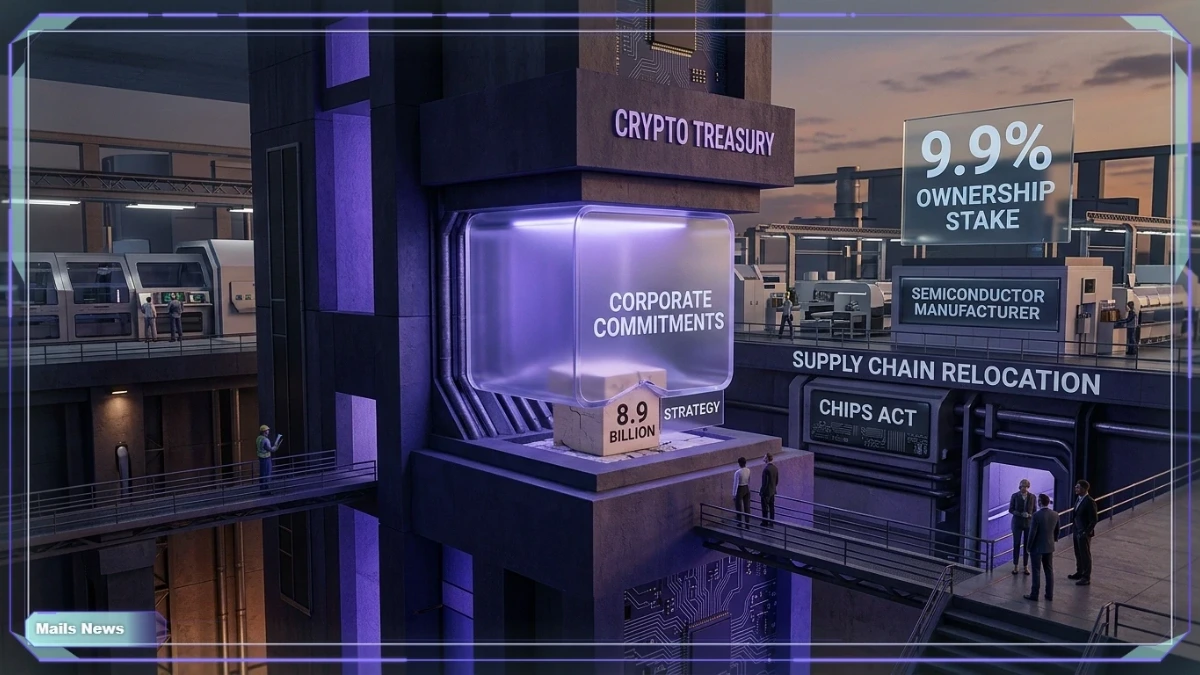
The most direct federal intervention in the private sector occurred with Intel. This marked a rare instance of the US government becoming a major shareholder in a publicly traded technology firm. In August 2025, the administration converted specific federal funding into corporate equity under the CHIPS Act framework. The finalized agreement granted the government approximately 433.3 million shares, acquired at a valuation of $20.47 per unit. This transaction represented a 9.9% ownership stake in the semiconductor manufacturer.
The administration structured this position to remain strictly passive. The state holds no board seats or special governance rights that could interfere with daily corporate operations. By May 2026, the market value of this federal stake surged past $50 billion. This was a massive increase compared to the initial $8.9 billion investment. However, this represents an unrealized capital gain rather than liquidated profit, highlighting the long-term nature of these industrial initiatives. The success of this equity conversion provided a powerful talking point for the administration’s economic stewardship.
Geopolitical Mechanisms Behind the TikTok Restructuring
Beyond traditional hardware manufacturing, the administration faced unprecedented challenges. These involved foreign software ownership and the rapidly evolving digital asset sector.
The TikTok USDS Restructuring
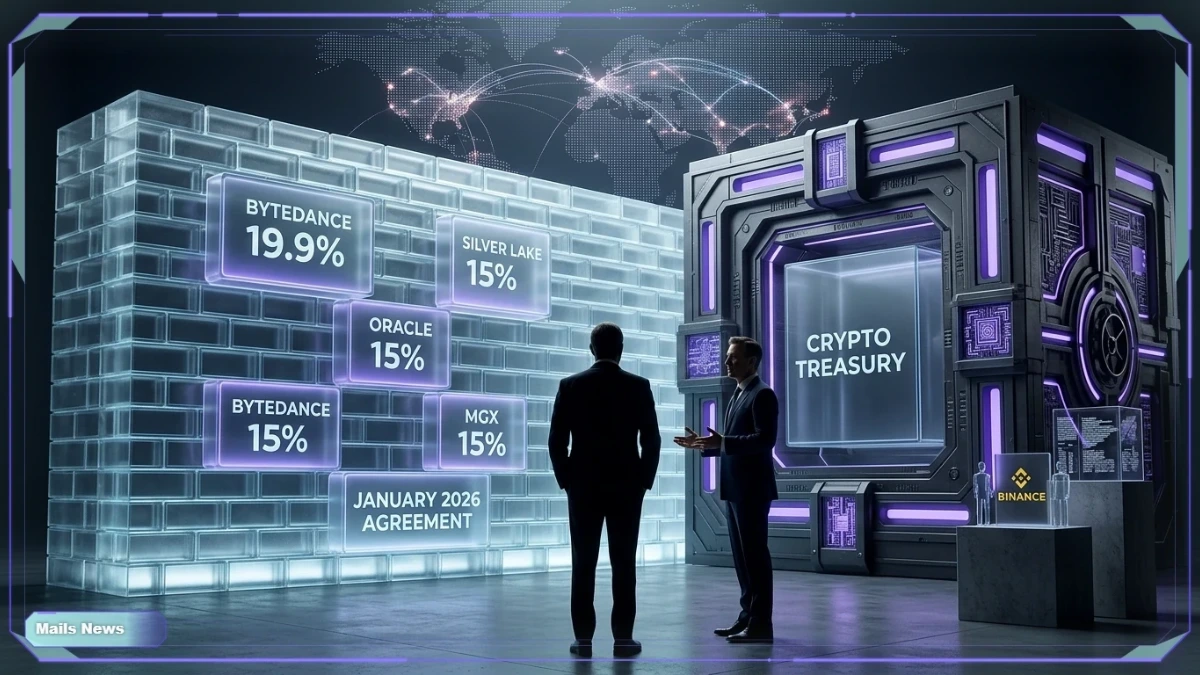
The restructuring of TikTok remains one of the most complex geopolitical puzzles handled during this period. And The enforcement of a potential nationwide ban faced multiple delays, contingent on ByteDance reducing its control. Finally, a definitive agreement was reached in January 2026. This led to the creation of TikTok USDS Joint Venture LLC. Under this new corporate structure, the Chinese parent company ByteDance retains a 19.9% ownership stake, while American entities Oracle, Silver Lake, and MGX each hold 15%.
This newly formed entity is specifically tasked with securing American user data and overseeing the recommendation algorithm. However, claiming that the algorithm is entirely US-owned oversimplifies the technical reality. The mechanism relies on strict auditing, localized security protocols, and domestic retraining. It avoids an outright transfer of foundational intellectual property. The spokesperson was tasked with defending this nuanced arrangement against critics who demanded a complete divestiture.
Trump Crypto Pivot and Binance
The executive branch executed a highly publicized pivot toward the cryptocurrency sector, the press office heavily promoted this shift. On October 23, 2025, Donald Trump granted a presidential pardon to Changpeng Zhao. Zhao is the founder and former chief executive officer of Binance. Karoline Leavitt framed this executive action as a definitive end to the ‘war on cryptocurrency.’ The administration claimed the previous leadership had waged this war. This rhetoric energized the digital asset market and aligned with the broader Trump crypto strategy. However, it did not erase the underlying judicial facts.
Zhao had previously pleaded guilty in 2023 to violating the Bank Secrecy Act, serving a four-month prison sentence. Concurrently, the exchange agreed to a massive $4.3 billion settlement with US authorities. The presidential pardon removes federal consequences for the individual. However, it leaves the corporate financial penalties and compliance agreements entirely intact. This dual approach of political leniency and strict corporate enforcement defined the administration’s complex relationship with the sector.
The Macro Catalyst of the Administration Crypto Pivot
The departure of the White House spokesperson leaves a distinct void. It impacts how the executive branch communicates its economic and technological priorities to global markets.
Future Signals for Corporate America
Karoline Leavitt concludes her mandate having successfully navigated some of the most volatile economic narratives of the decade. Her tenure defined the administration’s aggressive economic posture. She managed everything from the fallout of tariff threats against major retailers to championing unprecedented semiconductor investments. Her transition to an external advisory role ensures she remains influential within the political orbit. Nevertheless, her absence from the daily briefing room creates an immediate vacuum.
A critical question remains moving forward. Will the White House maintain its combative communication style or adopt a more measured approach? The identity of her successor will serve as the primary indicator for future market relations. The new spokesperson will inherit a complex portfolio of industrial and financial challenges. This role requires the same delicate balance between political messaging and market stability.
FAQ: Karoline Leavitt leaving White House
She is scheduled to step down at the end of August 2026 after serving approximately 19 months as the spokesperson.
In April 2025, Amazon considered displaying tariff costs on certain products. The spokesperson labeled this a hostile act, causing a brief 2% drop in Amazon’s stock.
In January 2026, the TikTok USDS Joint Venture LLC was created, with ByteDance retaining a 19.9% stake while Oracle, Silver Lake, and MGX each hold 15% to secure US data.
Disclaimer: This article is for informational purposes only and does not constitute investment advice. Cryptocurrencies and equities are volatile assets. Always conduct your own research before making any financial decision.